
Smaller companies affected
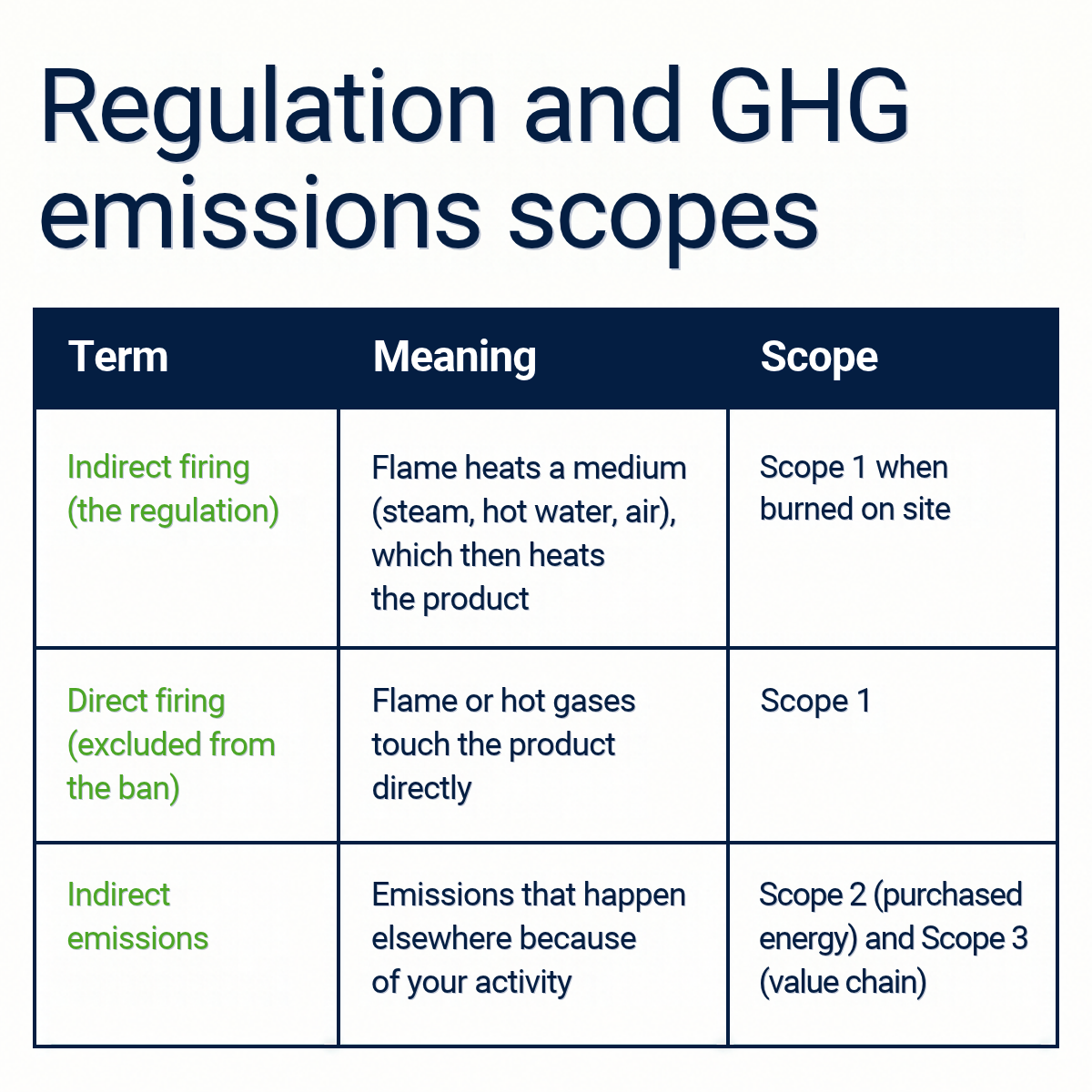
Scope 1: Direct emissions from sources the company owns or controls, such as its own boiler. Scope 2: Indirect emissions from purchased electricity, steam, heating or cooling. Scope 3: All other indirect emissions in the value chain, upstream and downstream.
On 7 October 2026, Norway’s Ministry of Climate and Environment adopted a regulation that bans oil and gas for “indirect firing” in industry not covered by the EU Emissions Trading System (ETS).
The statement released by the Ministry said the ban would apply from 1 January 2030 and would secure emission cuts at smaller companies that are not required to buy emission allowances currently.
The Norwegian Minister of Climate and Environment, Sigrun Aasland, said the ban will help Norway reach its climate targets by reducing emissions by 700,000 tonnes of CO₂ equivalent up to 2030.
“This corresponds to the annual emissions of around 350,000 fossil-fuelled cars, and it is an important step towards lower emissions and greater use of zero-emission solutions in industry,” the Minister said.
What is indirect firing?
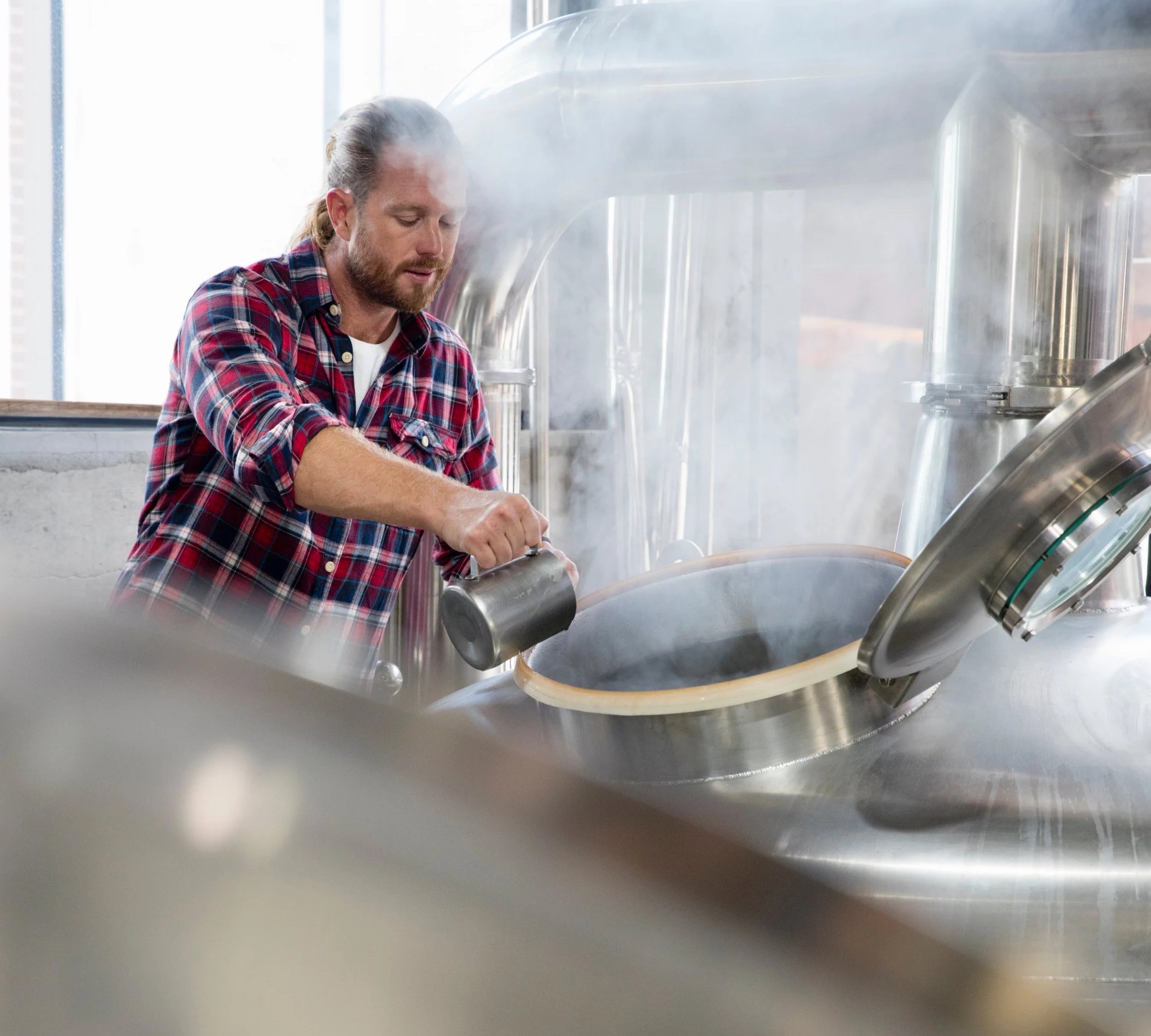
Indirect firing means burning fuel to make heat, steam, mechanical power or electricity for an industrial process, such as heating, drying or treating products. The flame or hot gases never touch the product. A gas boiler that supplies steam to a fish-processing line is a typical example. Direct firing, where the flame or hot gases treat the material directly, is not covered.
Indirect firing should not be confused with indirect greenhouse gas (GHG) emissions defined in the GHG Protocol, jointly set up in 1998 by The World Resources Institute (WRI) and the World Business Council for Sustainable Development (WBCSD).
Which companies are affected by the ban?
The government estimates around 300 businesses in Norway are affected. The ban covers non-ETS companies in mining, manufacturing and related industry codes (05, 07, 08, 09.9, 10–33 and 35.3). That includes food production, fish processing, animal feed, wood processing, and pulp and paper.
Companies already in the ETS would not fall under the abovementioned regulation. This covers mainly larger industrial sites, typically those with over 20 megawatts of total combustion capacity or in energy-intensive activities such as metals, refining, cement and larger pulp and paper mills. Waste incineration is also excluded.
However, a similar ban for industry under the ETS, anticipated for 2033, goes to public consultation, scheduled for this Autumn.
What changes?
From 1 January 2030, fossil fuels can no longer be used for indirect firing.
Liquid biofuels are also banned for this use unless they meet land-use and emission-reduction criteria equivalent to Norway’s Product Regulations. Biogas is not counted as a liquid biofuel.
Some uses are still allowed:
– burning process off-gases and residual gases.
– necessary firing for start-up and shutdown.
– burning a company’s own waste.
– mobile machinery.
– emergency generators.Temporary fossil fuel use is allowed during power cuts, or when a fault knocks out the regular energy supply.
Companies can apply for a time-limited exemption if the grid cannot connect their extra power demand by 2030. They must provide documentation from their grid company. Exemptions may also be granted in other special cases.
Breaches can lead to infringement fines. The County Governor or the Norwegian Environment Agency enforces the rules, depending on who issued the company’s permit.
How Norway facilitates fossil fuel phase out for industry
Norway’s state enterprise, Enova SF, owned by the Ministry of Climate and Environment and funded through the Energy Fund, supports technologies that can help phase out fossil firing in industry, such as electric boilers, industrial heat pumps, surplus-heat recovery and solid biofuels.
For affected plants, secure your grid connection and prepare for the phase-out
With regulation coming into effect in three years, now is the time to secure your future energy connections and security. Map your heating and cooling use, talk to your grid company to assess how your electricity needs will be met, and examine which low-carbon heat source fits your industrial temperature levels, with the best overall payback.
The good news
Electrifying your business can pay off. An e-boiler needs one megawatt of power for every megawatt of heat. A heat pump delivers several, which cuts both energy costs and the grid capacity a plant needs, especially when heating and cooling are used simultaneously. Implementing the required changes will help build a more resilient and profitable business over the long-term.
Contact the Enerin team
Trond-Atle Asphjell and Ralph Groen. Direct email addresses can be found on our Team page.
Sources:
News sources and direct quotes used were from AI-assisted translation from Norwegian into English. The Norwegian original versions are the authoritative versions.
Ministry of Climate and Environment announcement.
Regulation (Lovdata, FOR-2026-10-07-2009).
GHG Protocol, A Corporate Accounting and Reporting Standard (revised edition), Chapter 4, “Setting Operational Boundaries”, by WRI and WBCSD: