
Enerin AS appoints top-tier energy leader Jacob Norgaard Andersen as Chief Operating Officer
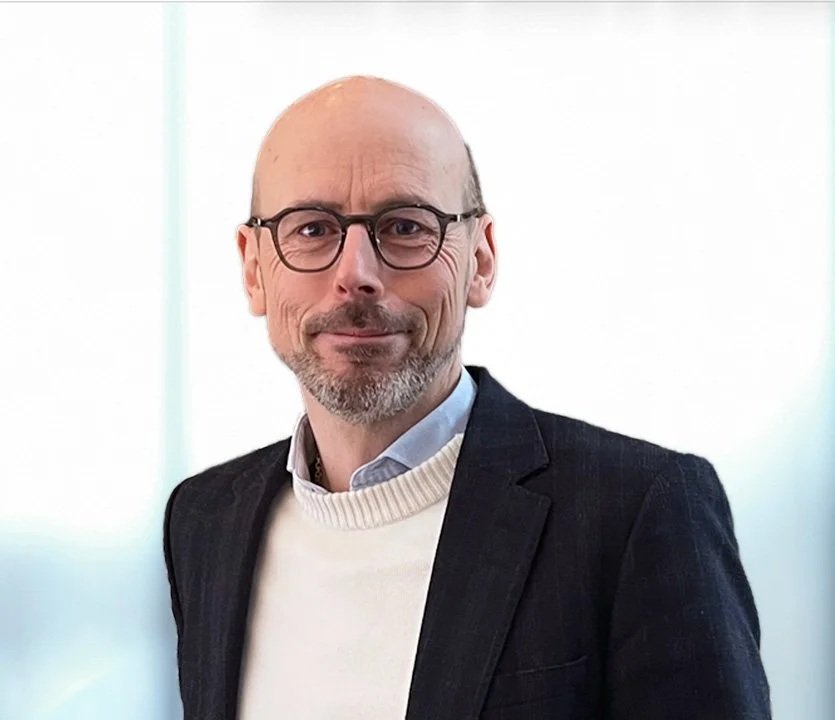
Jacob Nørgaard Andersen has been appointed as the company’s Chief Operating Officer (COO).
He joins Enerin from his role as Chief Executive Officer (CEO) of Danish green-tech company Stiesdal and brings leadership experience from Siemens wind and energy-infrastructure operations across the Americas, Canada, including Siemens Gamesa, and Vattenfall Denmark.
The announcement was released on 3 February, 2026 in a company press release.
With a distinguished track record in scaling wind energy and leading complex industrial operations, Jacob brings deep sector expertise and international leadership experience to Enerin at a pivotal stage of growth as it scales its high-temperature heat pumps.
We sat down with Danish-born Jacob to discuss how he sees Enerin shaping the future of industrial decarbonisation. Jacob has relocated to Norway where will be working from our headquarters in Asker, close to Oslo.
What attracted you to Enerin?
Enerin is at a very interesting stage transitioning towards becoming a commercial company. I’m excited by the opportunity to contribute to the development and transformation of the organisation.
Enerin has a very interesting technology which can play into the future energy mix. Decarbonisation of process heat is one of the most important factors in the efforts to reduce greenhouse gases.
Also, I’m happy to move to Norway. I always find it interesting to learn and adapt to new cultures.
What can industrial electrification of heating and cooling learn from wind and solar?
The renewable industry such as wind and solar have been very good at driving down cost and having a focus on the standardisation of its products with a strong execution. This mindset will also be relevant when starting the journey of industrial electrification of heating and cooling.
You are from Denmark, a country that has been instrumental in leading the global acceleration of wind power. A key policy initiative at the time, used by Denmark and Germany, was to introduce stable feed-in tariffs. These guaranteed wind turbine owners a fixed percentage of the retail electricity price, required utilities to purchase wind electricity, and provided investment subsidies (typically around 30% of capital costs in the early years).
What’s the right approach to decarbonise heat with high-temperature heat pumps?
We need to focus on creating a cost-efficient system and products that long-term can compete without subsidies. The initial transition will however require new policies and incentives.
What are the core factors for scaling Enerin’s technology
We need to have a reliable product with a high focus on standardisation. If we have that, then we can scale, and with scale and industrialisation, the cost of the product will come down. It’s deviations that limit how fast we can scale.
And the critical focus?
It requires team effort. We need to have an organisation where there is balance between the various disciplines. Then we need to be very mindful of what the most important factors are for our customers, rather than what we find interesting.
What’s driving industry to switch from fossil to electrified heat and steam?
At the end it comes down to cost and reduction of risks and, for some, there will hopefully also be the climate factor.
What is Enerin’s core strength?
Enerin has a product that is flexible in the temperature range (100°C to 250°C), with a low adaptation barrier. It’s compact and doesn’t require large modifications of the existing infrastructure.
HoegTemp is simply a cool piece of technology, and based on the customer interest, we have the future ahead of us.