
Enerin at Prague industrial heat pump conference

Oxford University Leader of the Energy Programme and Professor of Energy and Climate Policy at the Environmental Change Institute, Professor Jan Rosenow, made the keynote speech at the conference.
Energy experts from across Europe gathered in Prague from 4-5 November, 2025 for the International Industrial Heat Pump Conference (IHP2025), where industrial electrification linking renewables and thermal energy storage, paired with heat pumps for industry and buildings, dominated discussions on decarbonising heating and cooling.
Enerin, attending as a gold sponsor, used the platform to underline how high-temperature heat pumps can accelerate decarbonisation in some of industry’s most challenging sectors.
The event, organised by Tomas Caha and the Exergie team from the Czech Republic, expanded on large scale heat pumps and thermal energy storage to cover multiple technologies that foster Electrification in Action, maintaining momentum around the push to replace fossil fuels in industrial heat supply.
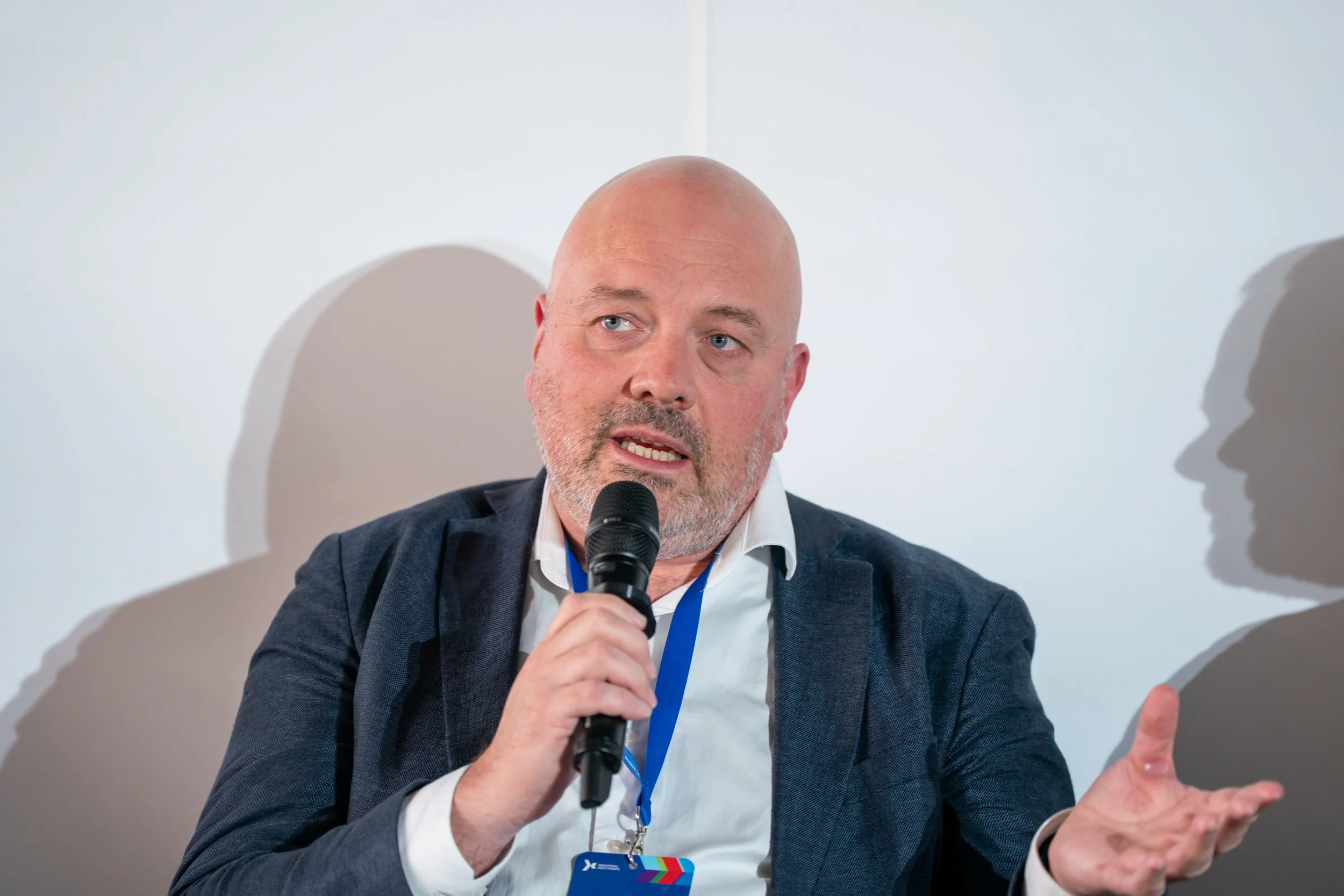
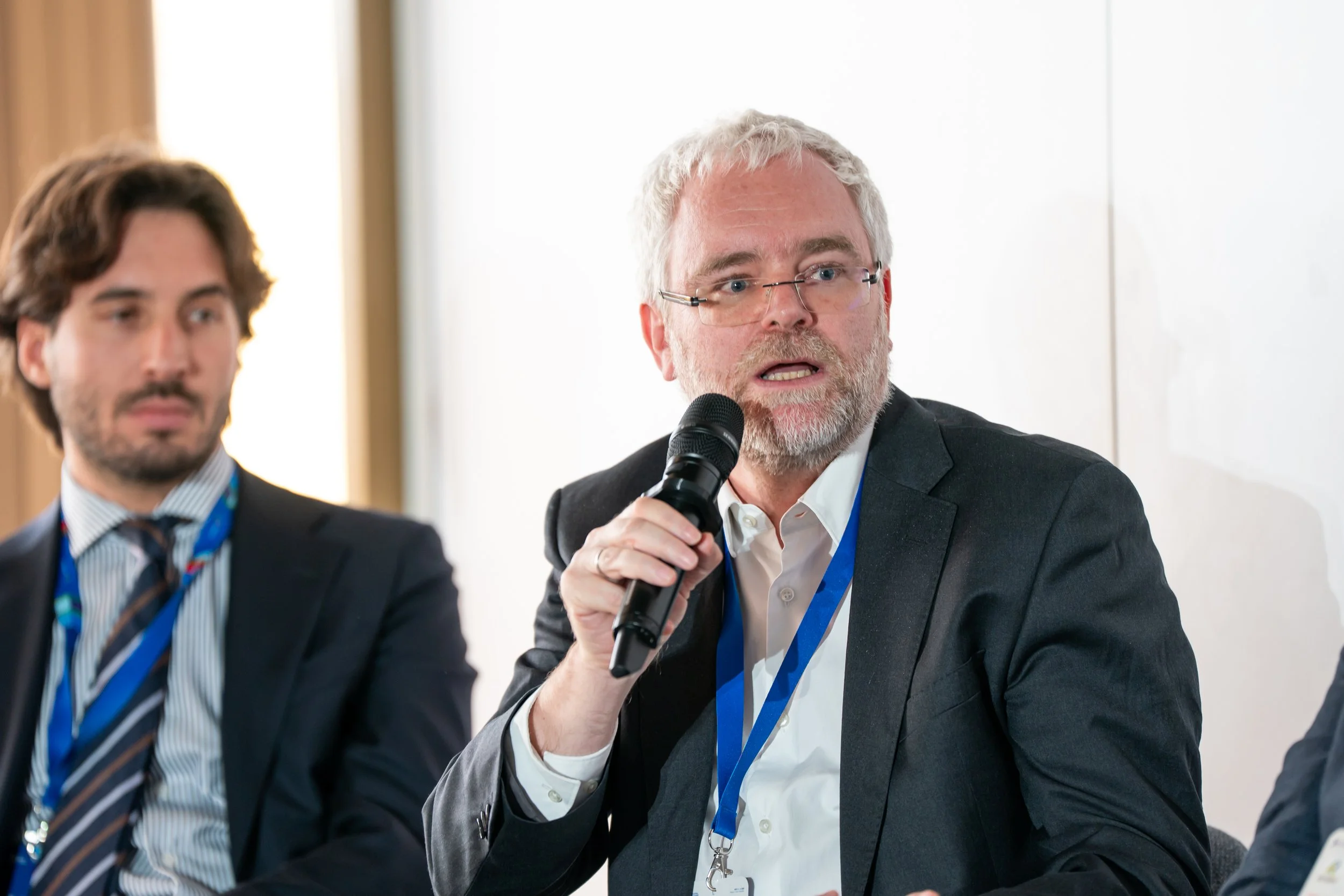
Enerin’s COO Trond-Atle Asphjell closed the first day with insights from the company’s three industrial pilot projects. Speaking on a panel moderated by the CEO of Geelen Counterflow, Sander Geelen, he was joined by Thomas Fleckl, Austrian Institute of Technology, Miloslav Keltner, Ministry of Environment, Czech Republic, and Davide Rizzi, Turboden.

(l-r) Davide Rizzi, Turboden, Thomas Fleckl, Austrian Institute of Technology, Enerin COO, Trond-Atle Asphjell, Miloslav Keltner, Ministry of Environment, Czech Republic, and CEO of Geelen Counterflow, Sander Geelen. All photos: Zuzana Havlínová.


Enerin’s business case — four energy pillars
During the panel discussion, Trond-Atle outlined the four pillars that underpin its industrial heat pump business case.
The first pillar centres on direct energy savings, driven by the heat pump’s energy efficiency (Coefficient of Performance, COP); its ability to draw heat from multiple sources across a wide temperature range to maximise industrial uptime; and the price differential between gas and electricity. Enerin’s heat pumps allow for operation when electricity prices are less than twice the gas price, regardless of the average spark ratio.
The second relates to secondary savings, including reduced chiller costs, lower water and chemical consumption, and the advantage of Enerin’s heat pumps using thermal energy storage to benefit from favourable renewable energy prices and grid tariffs.
A third pillar focuses on avoided costs, such as replacing ageing boilers or chillers, and reducing the grid capacity required for electric boilers while minimising production losses during installation.
Finally, he highlighted broader socio-economic benefits, noting that Enerin’s heat pumps outperform cooling towers and e-boilers by delivering better energy efficiency, reduce noise and health impacts, lower electricity demand, and ease the need for grid reinforcement.
“In many business cases, individual factors can therefore weigh much more heavily than COP or energy prices alone. The potential for heat pumps at all levels is significant, and we also see that the spark gap can rapidly develop in favour of heat pumps across larger regions.”
Enerin’s modular design allows customers to continue optimising their systems over time. If equipment such as dryers are replaced in the future with higher-efficiency models, redundant heat pump modules can be relocated rather than retired.
This approach allows companies to decarbonise almost all their thermal energy use from the outset while keeping the door open for further efficiency improvements as new technologies are introduced.
Inside the Stirling heat pump technology
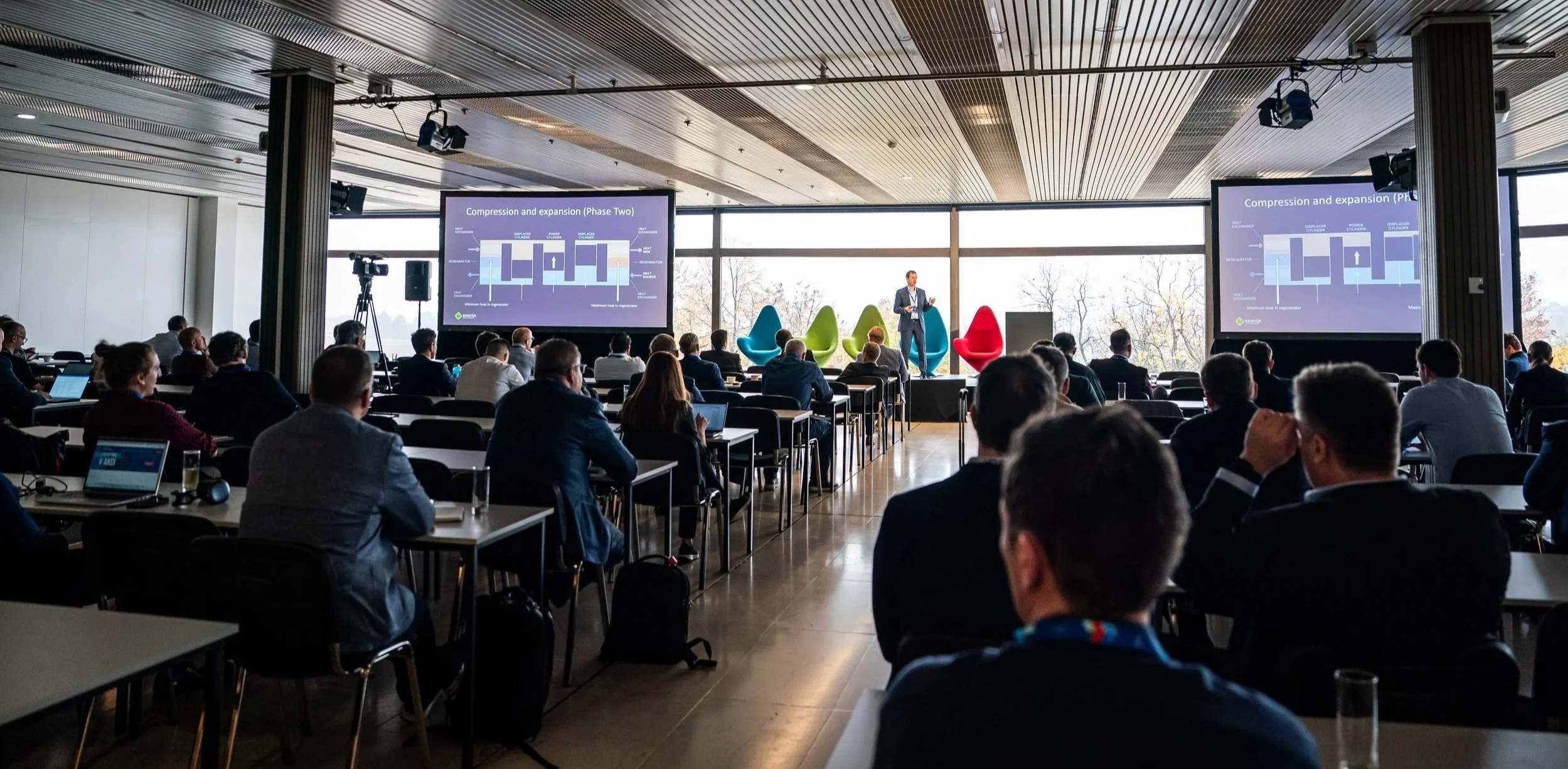
Photo: Zuzana Havlínová.
On the second day, Enerin CEO Arne Høeg showcased Enerin’s three industrial pilot projects and took participants inside the workings of the company’s Stirling-based heat pump. Using helium as a working fluid, the HoegTemp can rapidly shift heat and cold across a wide temperature spectrum, enabling fast response times that match industrial demand.
Høeg cautioned against relying solely on COP values when evaluating heat pump efficiency. “People often forget the pinch analysis in their quest for the Co-efficient of Performance,” he said. He advocates a comprehensive, holistic view to optimise energy use across the entire factory, rather than relying only on COP values that measure efficiency for a single unit.
A subsequent panel held after the keynotes, Steam Dreams to Industrial Reality, explored the maturity of steam-producing heat pumps and the role of thermal energy storage — with speakers from Philip Morris International, Rondo Energy and Brenmiller Europe assessing how new business models may emerge as systems scale.

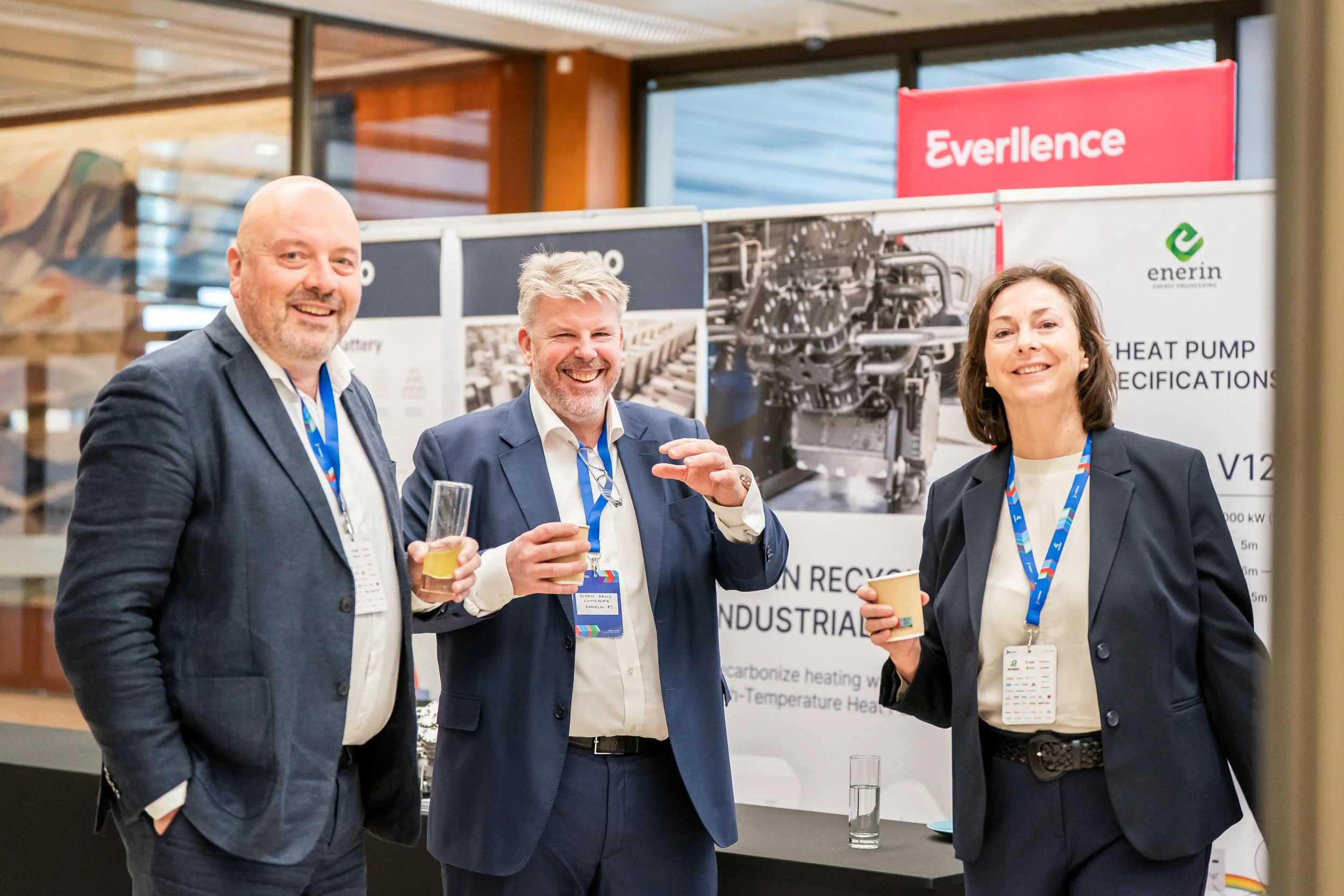
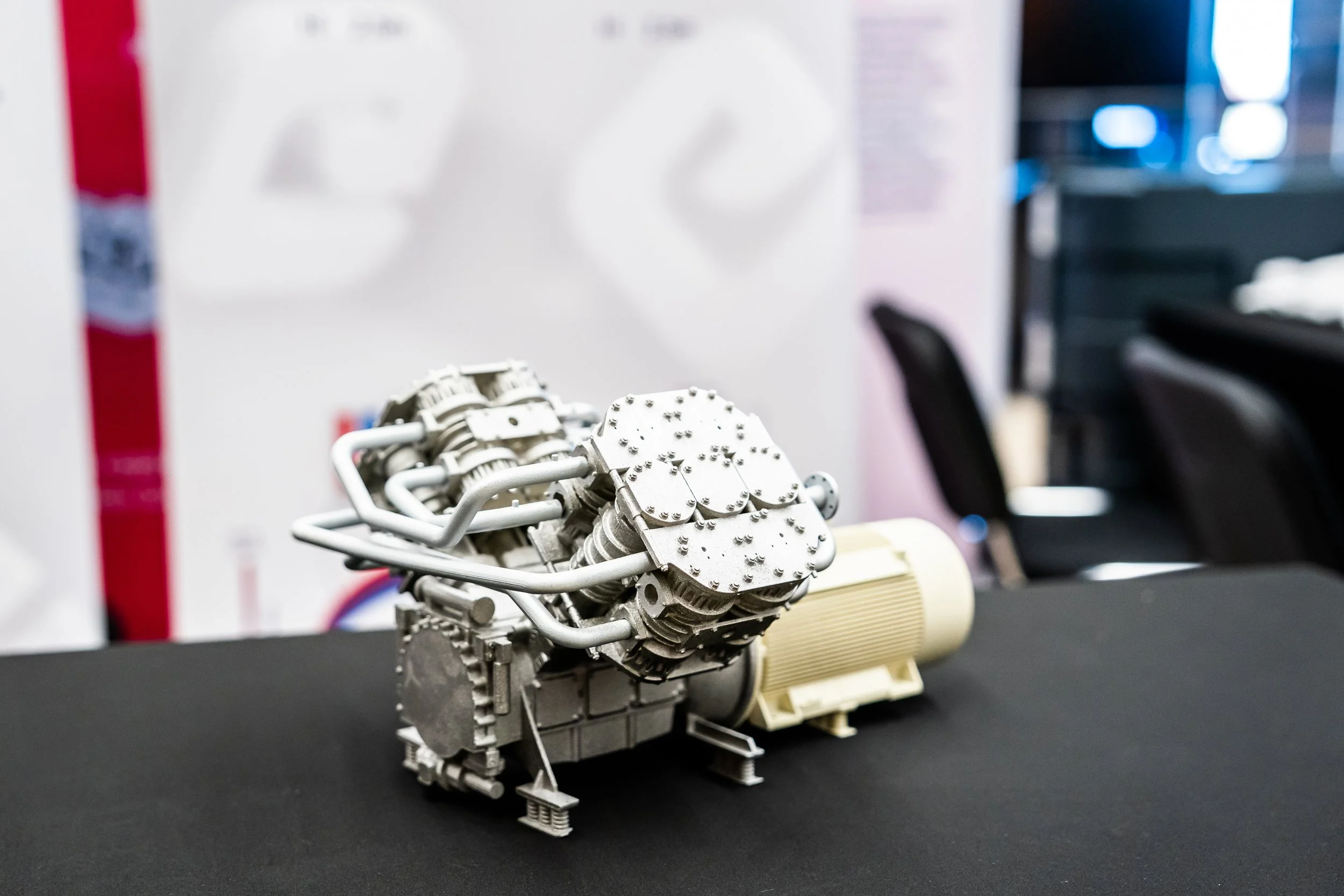
Electrification that fits industry
Enerin’s heat pumps, that need less real estate due to their size and simple integration, can be integrated with thermal energy storage. They are designed to electrify industrial steam supply using multiple heat sources — from waste heat to seawater, river water or ambient air.
With operating tolerances spanning –30°C to 250°C, the HoegTemp can support factory start-up working in combination with fossil boilers before waste heat is generated.
For industries seeking practical decarbonisation pathways, Prague offered a clear message: high-temperature heat pumps are no longer an emerging technology — they are ready for deployment, and companies like Enerin are pushing them into real industrial settings.