
HoegTemp heats and cools for IVAR biogas carbon capture process
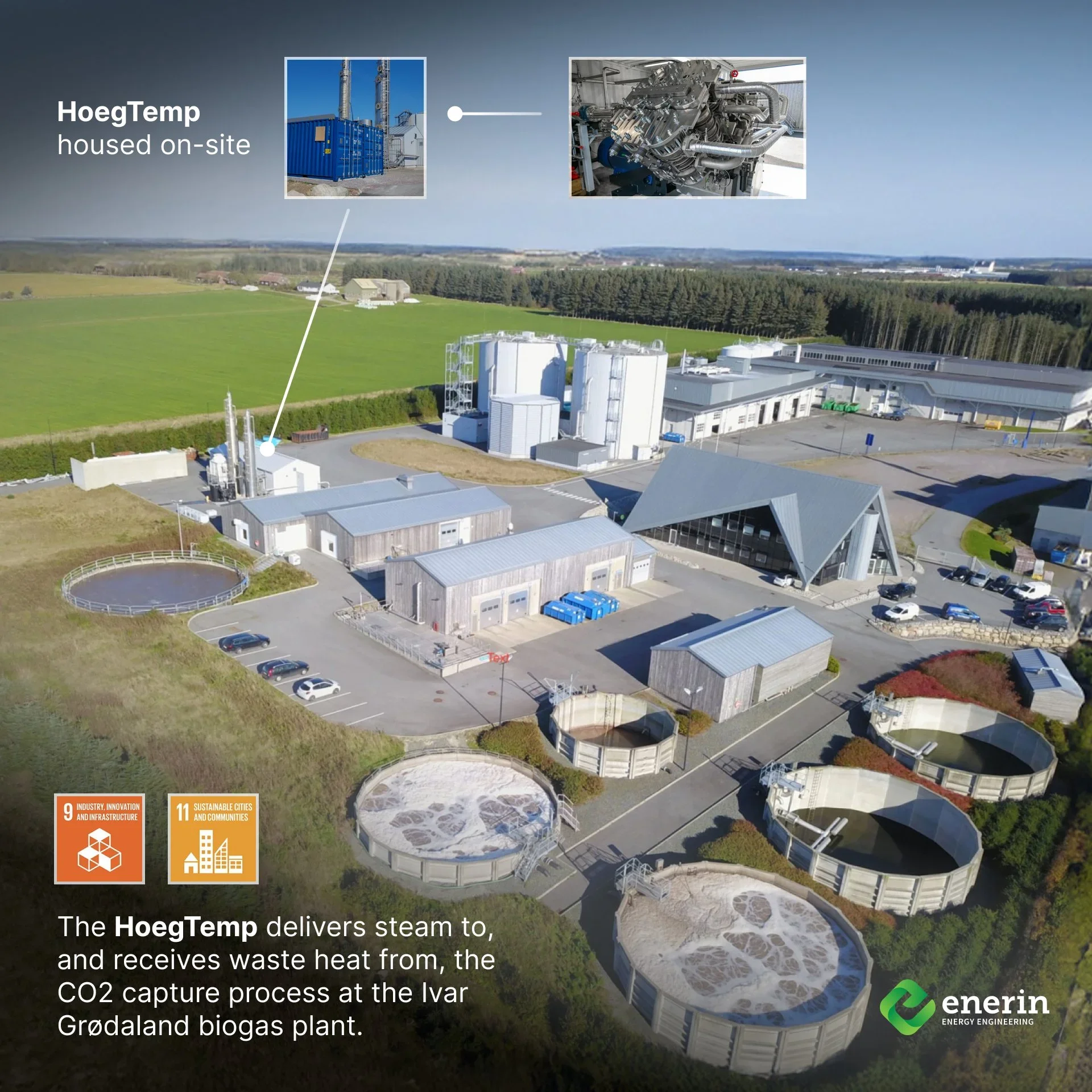
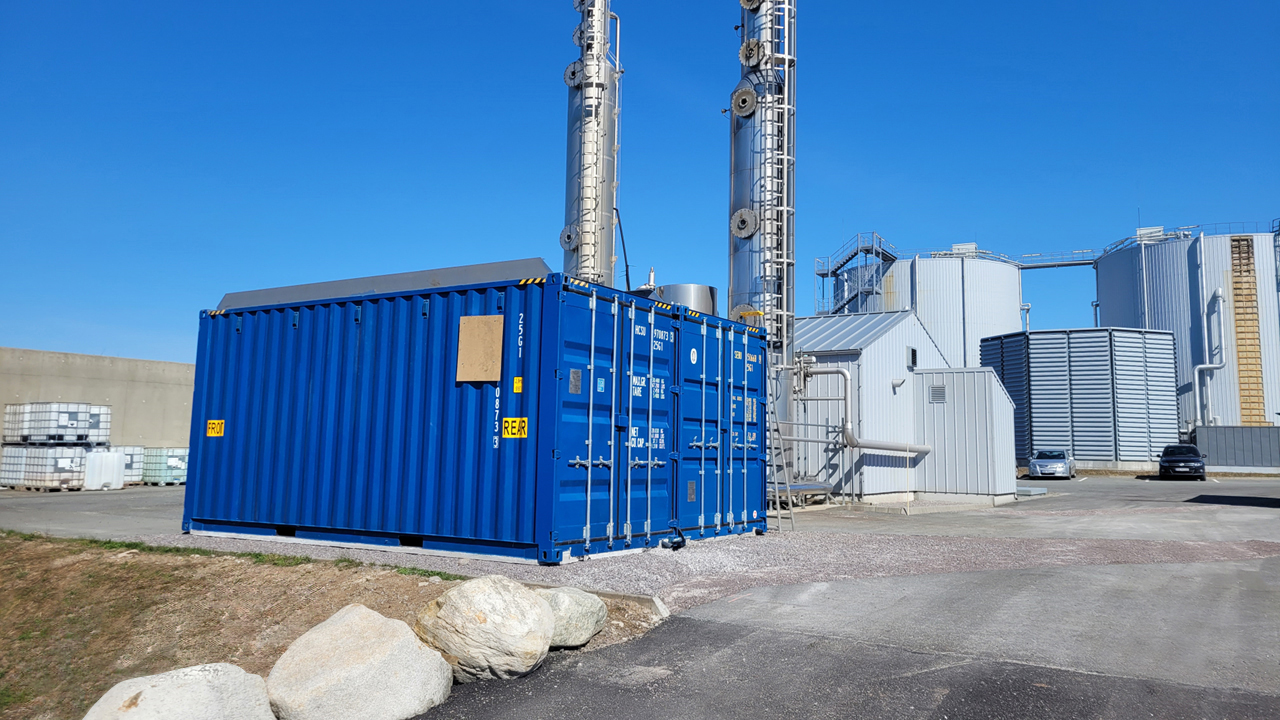
HoegTemp is installed at IVAR biogas plant to supply high-temperature steam and cooling
For decades, industrial facilities have treated heating and cooling as separate infrastructure challenges. Boilers generated steam. Cooling towers removed waste heat. Each system consumed energy independently, often resulting in substantial energy losses across industrial operations.
Enerin’s HoegTemp technology can deliver both heating and cooling from a single integrated system. Since November 2023, the high-temperature heat pump has performed these dual tasks in the biogas stream at the IVAR Municipal Wastewater Treatment Plant situated near Stavanger in Norway.
Treating raw biogas from wastewater
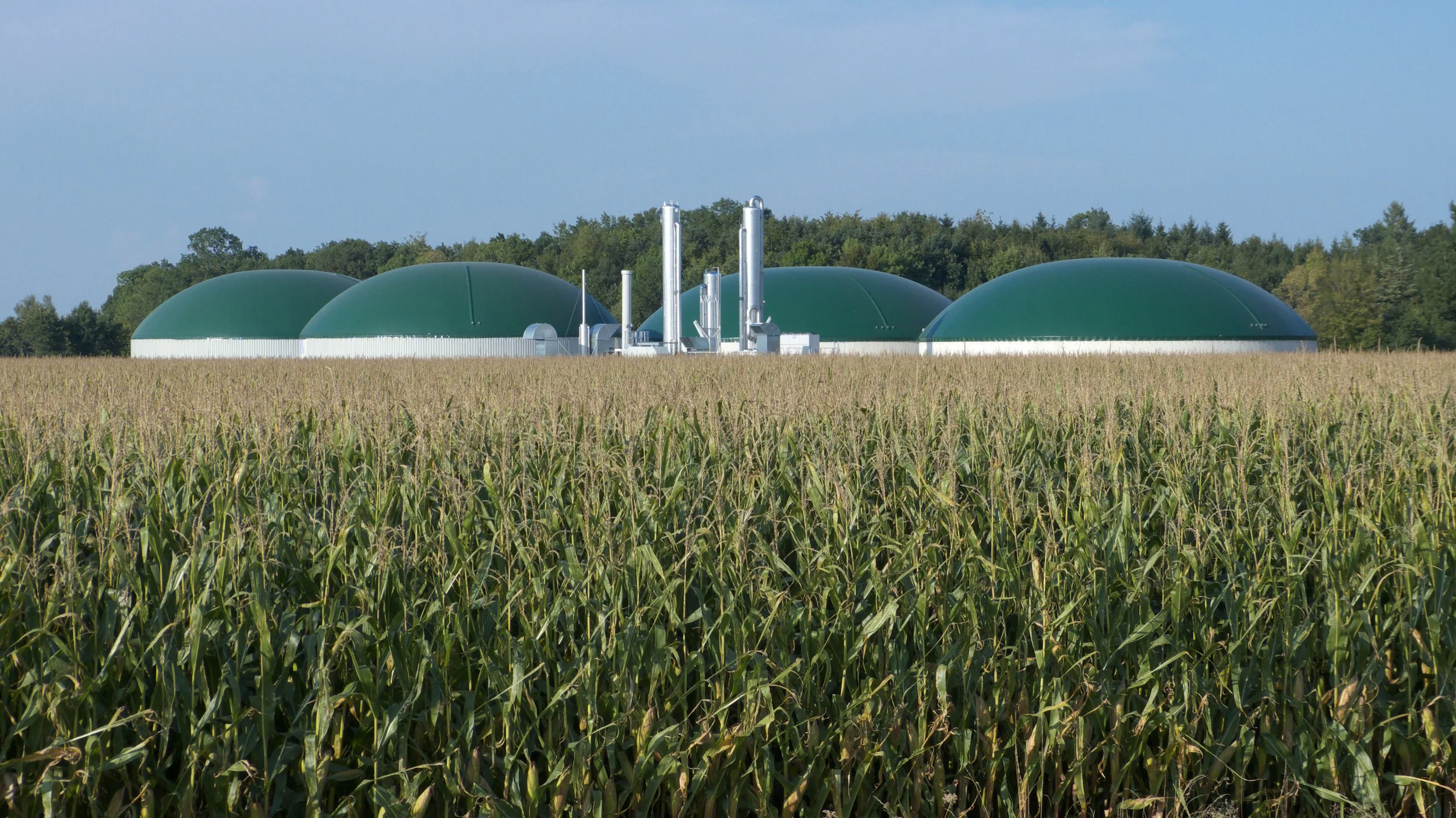
Raw biogas from anaerobic digestion contains methane, carbon dioxide, water vapour, hydrogen sulphide, and trace contaminants. It must be upgraded, or refined, before it can be used.
To make biogas suitable for grid injection and other end uses, it must undergo several upgrading steps, including the removal of CO₂ in a stripping process. While this CO₂ can be used locally, for example to enhance greenhouse growth, it is often vented to the atmosphere, wasting a potentially valuable resource. Future on-site CO₂ liquefaction facilitated by Enerin’s HoegTemp™ technology could transform this waste stream into a local value stream.
How the CO2 stripping process works
In the CO₂ stripping process, biogas enters an absorber column where an amine solvent removes the CO₂ in an upgrading process resulting in the biomethane end-product, which is sold as a natural gas substitute. (It is compressed to match the pressure of the gas network and then fed into the pipeline.) The CO₂-loaded amine solvent is then regenerated in a stripper column using steam, releasing the captured CO₂ so the solvent can be reused in the stripping cycle.
The challenge inside amine-based CO₂ stripping is straightforward. The process requires high-temperature steam to regenerate the amine solvent and release captured CO₂. At the same time, the absorber and solvent circuits must be continuously cooled to maintain efficient CO₂ capture performance.
Traditionally, this would require two separate utility systems:
A fossil or electric boiler to generate steam; and
A cooling system to remove excess process heat.
HoegTemp introduces a different approach
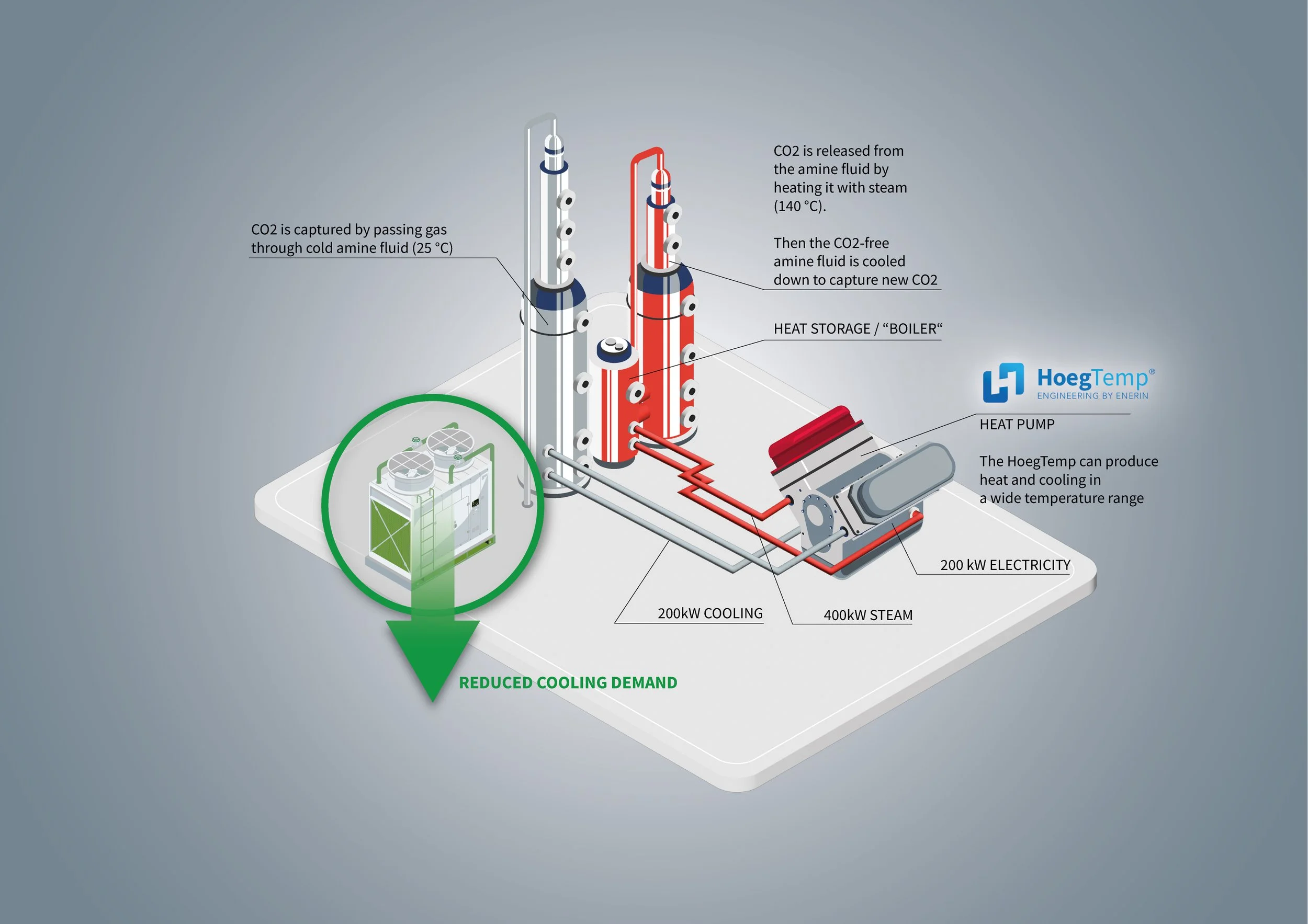
Instead of discarding excess waste heat into the atmosphere from the cooling infrastructure, the Stirling cycle HoegTemp, using helium as the working gas, captures and converts that heat from the cooling circuit into high-temperature steam.
Specifically, waste heat from the biogas plant’s cooling water circuit (21–22°C) is upgraded to hot water in the HoegTemp heat pump before being transferred in a closed-loop water circuit that serves as the heat sink. This heat is then transferred to a steam generator, producing steam at 140–200°C for reuse in the CO₂ capture process.
Enerin’s Stirling-cycle architecture using helium achieves:
One-step temperature lifts of 200°C without compromises—178°C is being achieved at IVAR.
Steam delivery directly compatible with existing stripper/reboiler systems.
200 kW cooling at IVAR, where the heat pump is working in parallel with the cooling tower to maintain efficient CO₂ capture performance.
A Carnot efficiency of 50-60%, resulting in a Coefficient of Performance (COP) typically of 2-3, application-dependent, equivalent to 50-70% lower energy consumption.
Stable operation across an exceptionally wide temperature range (-30°C to 200°C);
Very low temperatures can be achieved, enabling entirely new applications such as cryogenic cooling and liquefaction.
Decentralised liquefaction potential of CO₂ in smaller biogas plants
Liquefaction of gases such as CO₂ or biogas is traditionally associated with large, centralised, and capital-intensive facilities. These processes require substantial cooling capacity and are often not viable at smaller scales.
The HoegTemp capability to generate cryogenic temperatures, combined with modular and scalable design, creates the potential for smaller-scale liquefaction systems for CO₂ .
This could be done in biogas facilities, where waste heat from the liquefaction process can be recycled and utilised in heating processes, supporting local distributed gas production and CO₂ handling while fostering a more flexible and cost-efficient energy infrastructure.
Additional economic benefits using a heat pump at IVAR
IVAR has cited that high electricity prices have been a key motivational factor in continuing to use the HoegTemp on-site due to favourable cost savings delivered in the stripping process. The energy consumption for the CO₂ capture in the cooling tower at IVAR is reduced by a factor of 1,8-2, saving up to 50% of energy in that process.
With energy prices remaining volatile across Europe, following the disruption of shipping through the Straight of Hormuz, IVAR demonstrates how wastewater streams can create value far beyond biogas upgrading alone.
By combining heating and cooling in a single process, the facility improves the efficiency of CO₂ capture while unlocking additional revenue and energy-saving opportunities. The approach highlights the broader potential for integrated thermal systems across biogas, carbon capture, and liquefaction applications.
Want to learn more?
Explore our Website and stay informed in News, Products, Applications and Media Assets.
Reach out through the Contact Form, located at the bottom of any main menu page.
We aim to provide you with an efficient energy solution to support your specific site requirements.