
Enerin to present 15,000 hours of Stirling operating data at IEA conference
Enerin CEO Arne Høeg will present peer-reviewed data at the 15th IEA Heat Pump Conference this Friday demonstrating that the HoegTemp ultra high-temperature heat pump (HTHP) delivered steam up to 200°C operating across 15,000 operating hours. The data was collected from three industrial pilots in the biogas, pharmaceutical and seafood-processing sectors.
The Stirling cycle steam generating heat pump (SGHP) delivered steam to all customers on demand, despite fluctuating heat-source quality and steam pressures.
Out of the 15,000 hours*, 8,000 hours were filtered representing the most stable one-hour operating conditions. This ensured a high-quality and consistent dataset for performance evaluation and analysis.
The findings confirm the HoegTemp ultra high-temperature performance and operational flexibility across a range of temperatures within three factory environments — proof that Enerin's Stirling technology is ready for commercial deployment.
HoegTemp™ fit for the boiler room
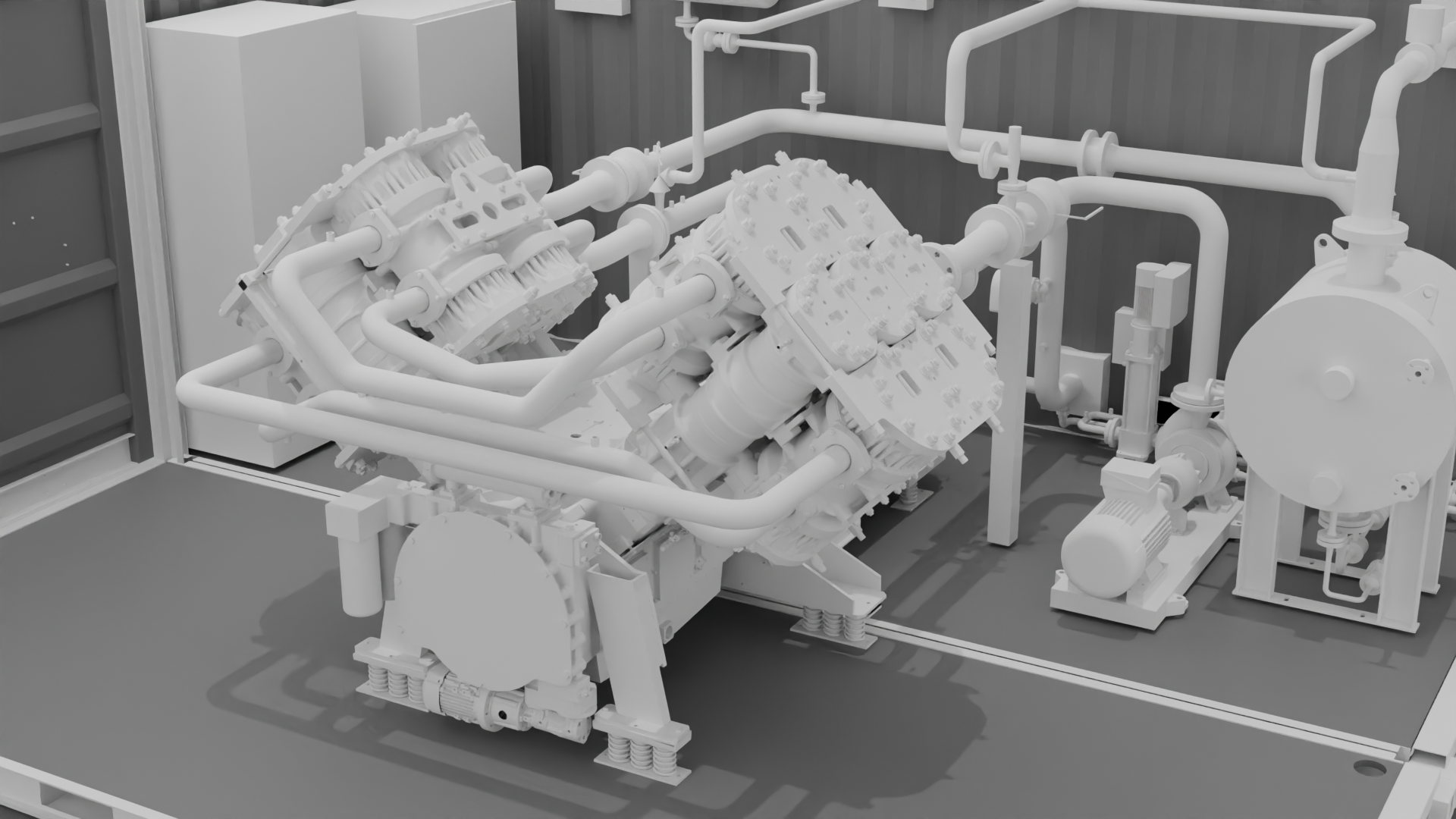
The HoegTemp render from SUSHEAT project shows the heat pump connected directly into the boiler system on site.
The HoegTemp HTHP steam generating heat pump (SGHP) can either replace fossil fuel and electric boilers with a higher energy efficiency, complement them, or be integrated with other heat pump systems on site.
The heat pump pilots presented in this study have a rated capacity of 400kWTH operating with sink temperatures up to 200°C and source temperatures between -30°C to 130°C.
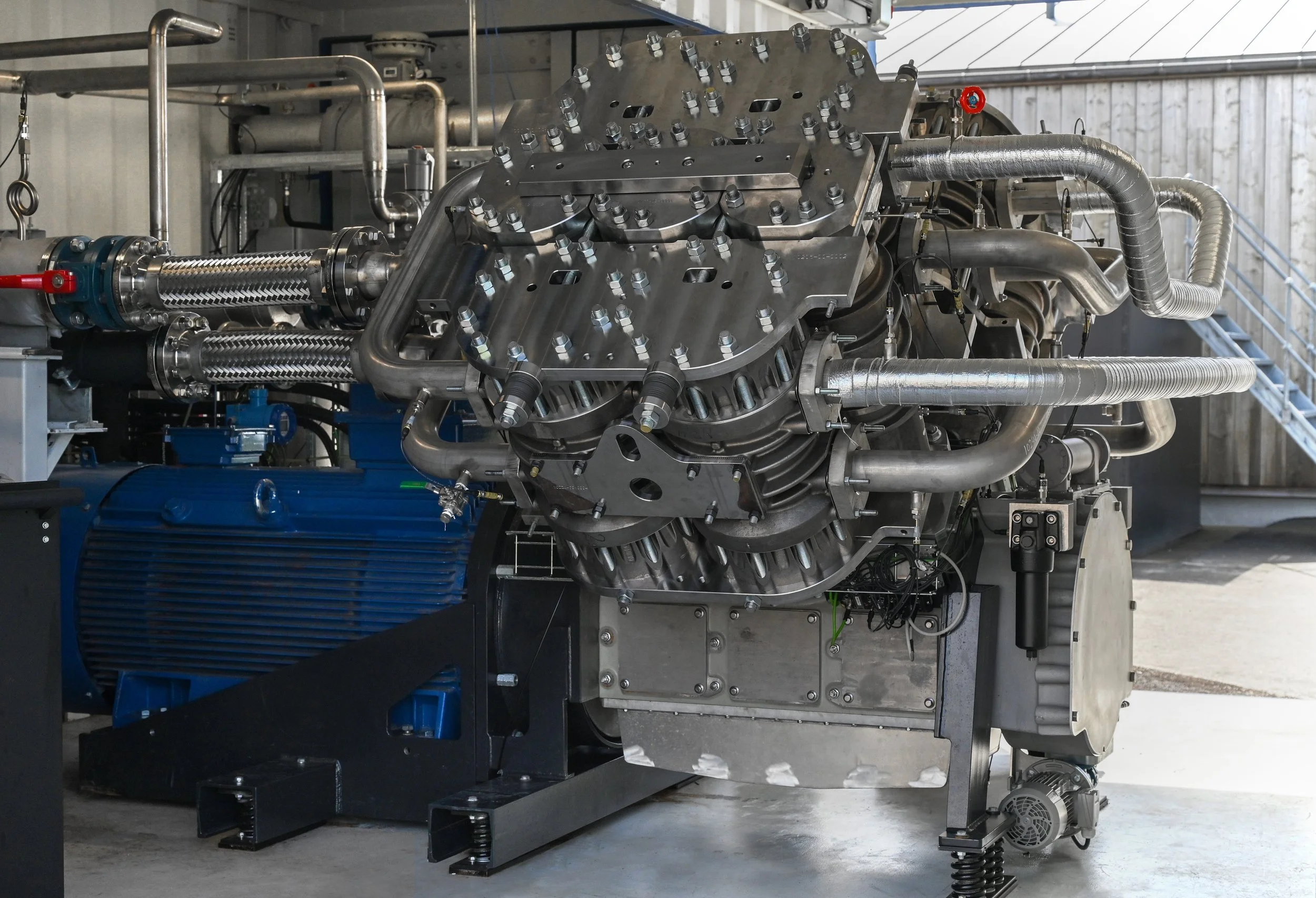
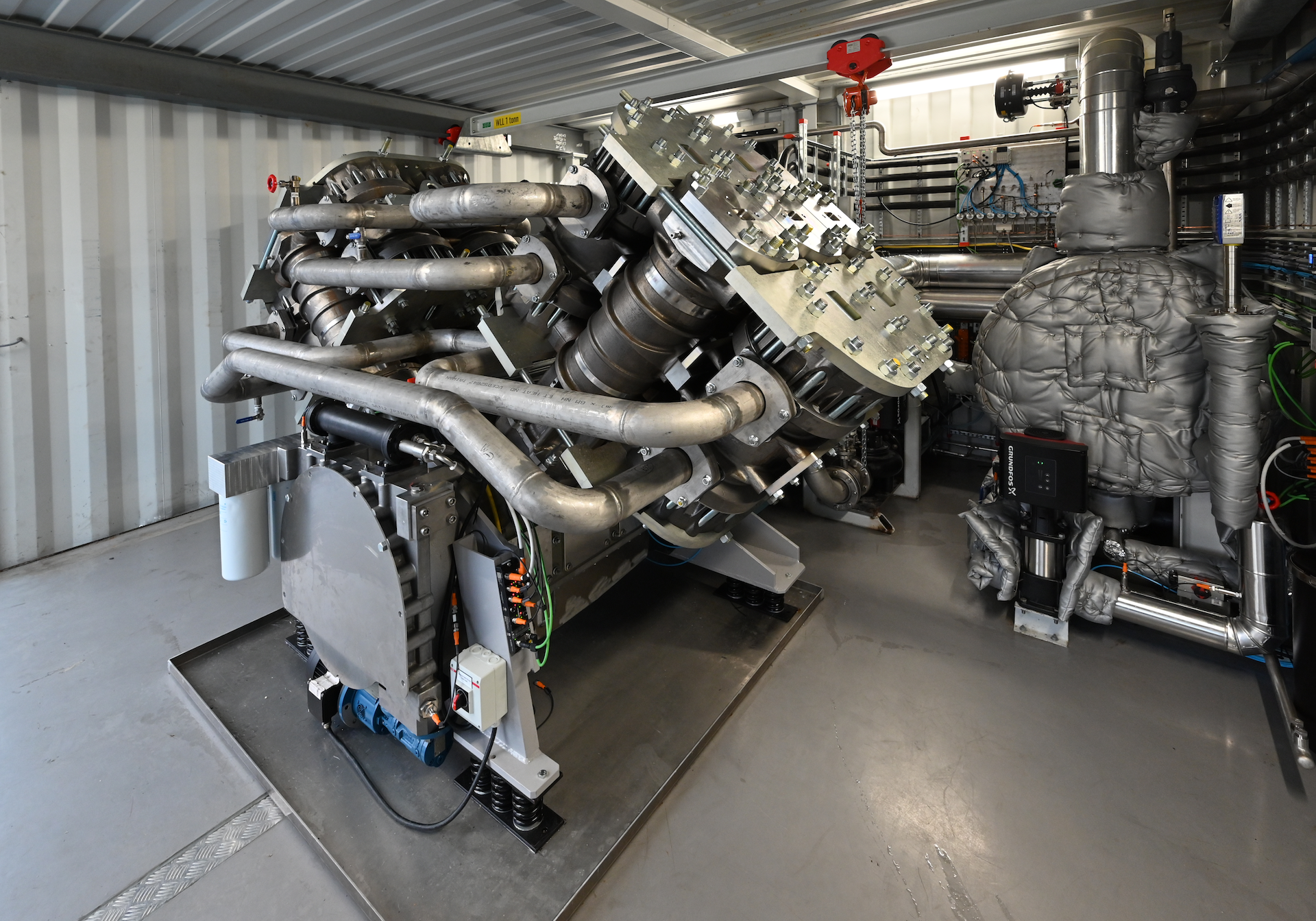
The three operating sites shown in the photos below (l-r) are:
IVAR biogas facility near Stavanger, Norway — Machine 1.
GE Healthcare pharmaceutical production facility in Lindesnes, Norway — Machine 2.
Pelagia seafood-processing plant in Måløy, Norway — Machine 3.
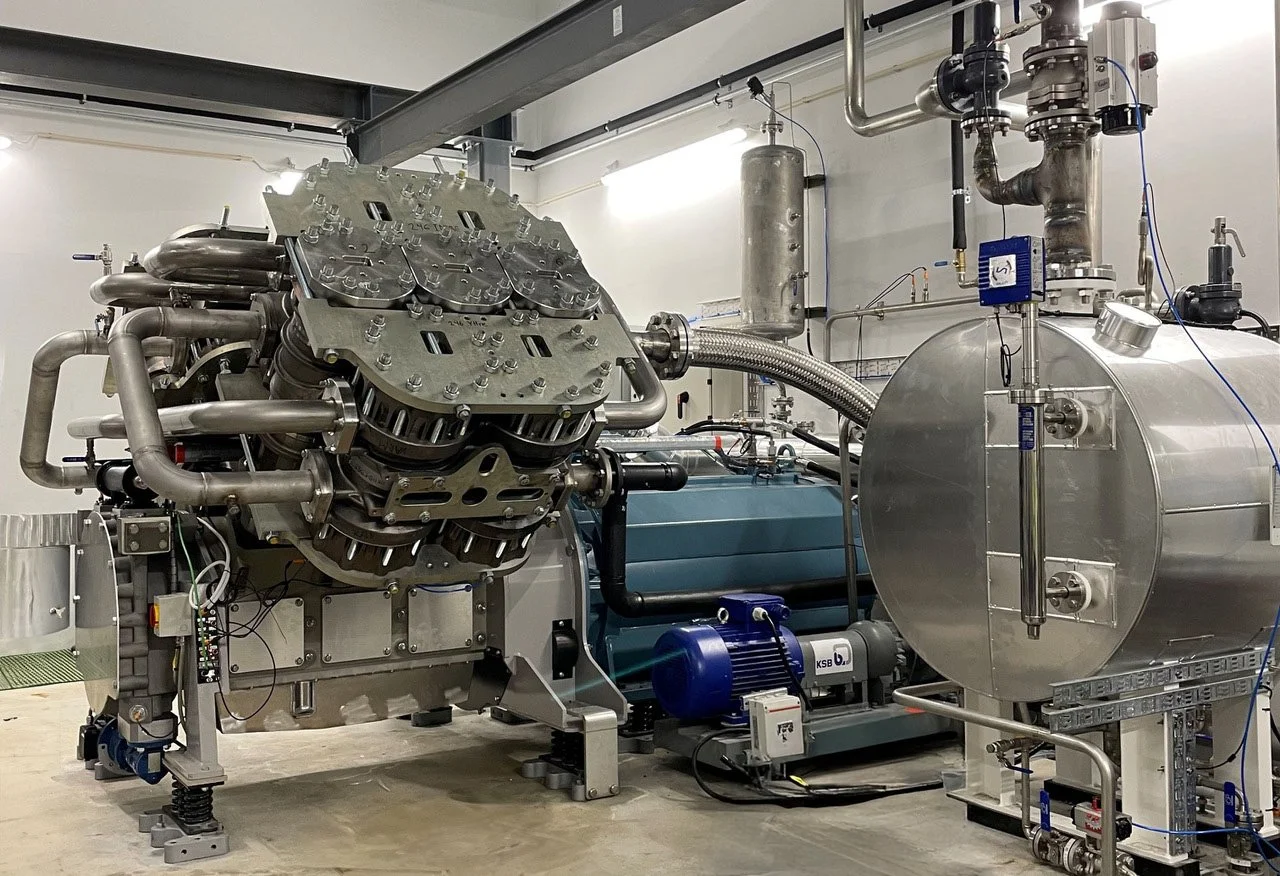
The three installations operated with:
Heat-source temperatures ranging from 15°C to 68°C.
Sink temperatures from 134°C to 200°C.
One step temperature lifts, up to 185°C, with a leading energy efficiency.
Rapid variations in industrial load conditions.
Fluctuating heat-source quality and steam pressures.
Temperature ratios from 1.25 K/K to 1.55 K/K (Kelvin).
While all three Mark I machines were almost identical in design, the data shows incremental efficiency improvements were achieved from Machine 1 through to Machine 3 (with the best efficiency). The trendline of this development, including a comparison chart of peer reviewed and non-peer reviewed HTHPs and Stirling machines is documented in the paper — link below.
One step lift with good energy efficiency across the operating range
The achievement of an ultra-high, one-step temperature lift of up to 185°C, in a single-stage process, was accomplished with a good energy efficiency for the large temperature lift required. The data shows a high efficiency all the way from 40% of the output (part load) to 100% output (full load).
In practice, this means the system can achieve higher energy efficiency when operating below full capacity, while still retaining the flexibility to ramp up output rapidly when industrial thermal energy demand increases.
The challenge for HTHP Original Equipment Manufacturers aiming to replace the fossil fuel boiler is multi-faceted. The HTHPs should satisfy the required industrial steam demand fast and reliably, preferably across a range of temperatures; integrate with on-site renewable energy and thermal energy storage; and have the flexibility to be installed with other on-site equipment now and in the future with minimal retrofitting costs. Replacing the ubiquitous fossil fuel and electric boiler at a competitive cost for a decarbonized industry is an electrification challenge.
Covering energy demand in the boiler room

Industrial boiler rooms do not operate at one constant level. Steam and heat requirements rise and fall throughout the day depending on production schedules, cleaning cycles, batch processes and variations in waste-heat availability.
As industrial demand for heating and cooling continuously fluctuates, factories typically rely on multiple fossil-fuel and electric boilers to cover the industrial load, or demand. Boiler rooms rely on a combination of baseload systems, flexible load-following equipment, and peak-demand units that respond to changing process conditions throughout the day.
Factories power their processes by automatically switching between electricity or gas boilers that run according to preferential prices in real time. Gas and electricity prices vary throughout the year, hour-by-hour, day-to-day, influenced by geopolitics, futures’ prices, supply/demand fundamentals, seasons and the weather. Operational flexibility driven by reliability, cost and redundancy is key to the customer — with no downtime.
Replacing boiler systems with flexible heat pumps — HoegTemp
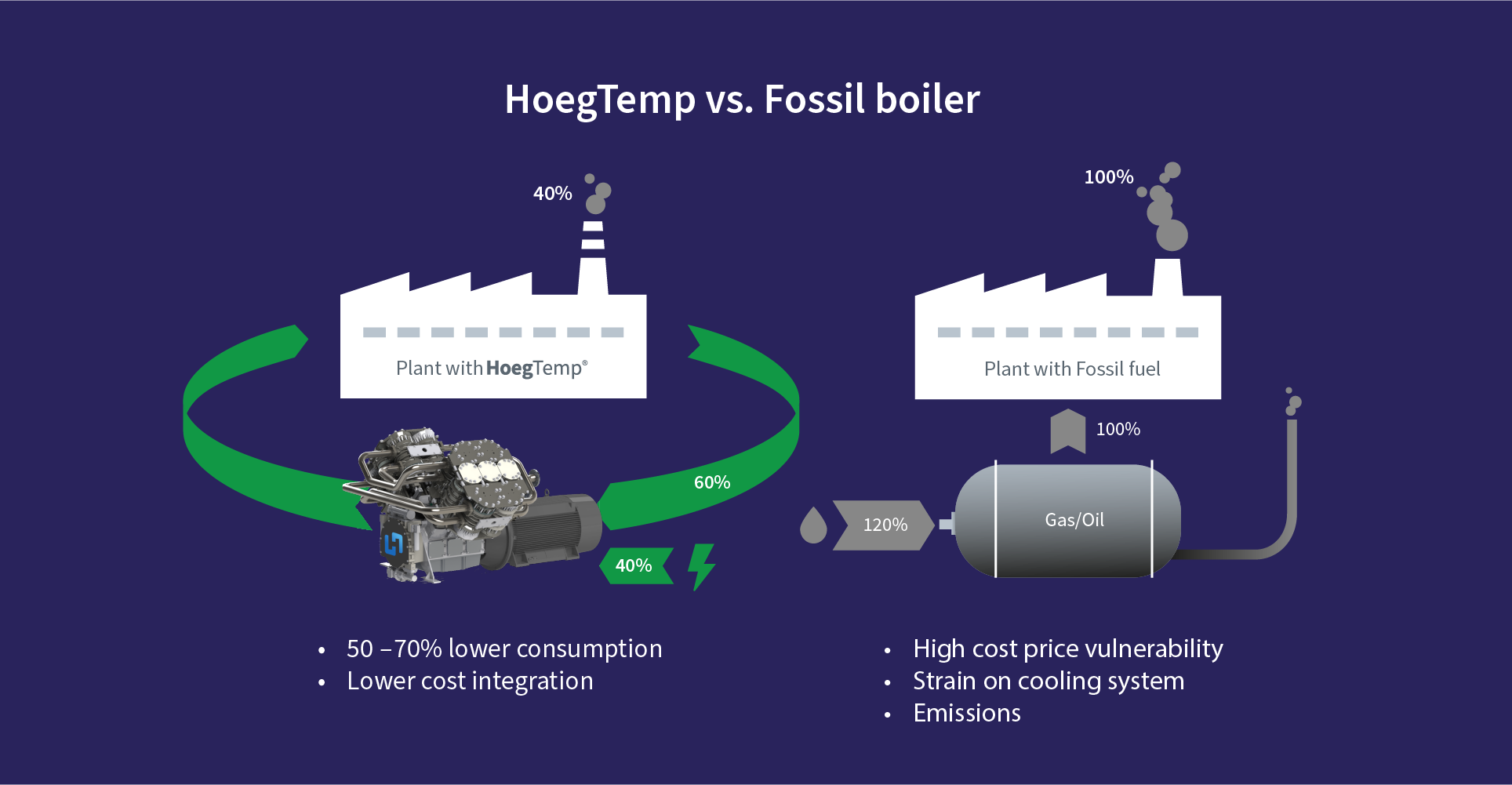
Replacing current boiler systems with flexible heat pumps requires the technology to have what is technically known as turndown capability, or the ability to offer high or low fire settings. This allows operators, or automated control systems, to quickly increase or reduce heat and steam output in response to changing industrial process conditions.
Not all industrial heat pumps sourcing waste heat can achieve this because they depend on stable inlet and outlet temperatures to maintain reliable efficiency. This can present both operational and cost constraints because multi-stage heat pump systems are expensive to engineer into a process. And while they may theoretically have a higher energy efficiency, they are difficult to control because of their vulnerabilities to the quantity (availability) and quality (temperature) of waste heat which can result in efficiency losses.
The heat pump that is designed to achieve the operational flexibility of conventional combustion boilers by being able to source heat from multiple sources and adjust heat and steam output levels quickly to match changing industrial demand has a distinct advantage.
Stirling heat pumps can deliver high-temperature heat electrically and operate beyond the limits of most conventional systems. The HoegTemp can cover base, flexible and peak loads, with a flexible control offering direct energy savings — although the configuration of the machines vary site-by-site, depending on the available heat sources and targeted output.
Because Enerin’s heat pumps can source heat from waste heat, air and water, and operate flexibly across a wide temperature range (-30°C to 130°C), they present more uptime possibilities for the customer. They outperform cooling towers and e-boilers through reduced electricity consumption, which eases grid pressure. They can be operated when electricity prices are less than twice the gas price, regardless of the average spark ratio (price difference between electricity and gas).
Optimal sizing of a factory equipment for peak demand, and peak loads
This is highly relevant when determining the optimal sizing of a factory system. Industrial energy systems are typically not designed only for peak demand, because sizing equipment permanently for maximum load can reduce overall annual efficiency and increase capital costs.
Instead, operators aim to size systems around the most common operating range where efficiency is highest, while maintaining enough operational flexibility to cover short-term peak loads. This essentially comes down to plant engineers and managers making a comprehensive plan to optimize the best energy use across the entire factory or site.
HoegTemp has the cost advantage of a simple integration fitted directly into the boiler system, working with other boilers and thermal energy storage. The 500 kilowatt to 1 megawatt (MW) modular machines can be combined and configured for the best energy performance, including cooling, for small to medium-sized factories with a thermal energy demand of up to 10MWs.
HoegTemp delivers impressive CO2, cost savings for reduced climate risk
In Norway, where electricity prices are comparatively low and carbon costs are expected to rise, flexible electrification technologies are strengthening the business case for replacing fossil-fuel boilers with industrial heat pumps.
The research paper compared emissions from conventional fossil-fuel steam generation with the HoegTemp system operating on grid electricity. Using Norwegian electricity, the analysis shows an LPG boiler emitting approximately 230 gCO₂/kWh compared to an estimated ~7.4 gCO₂/kWhth for the HoegTemp installation. The systems can reduce emissions by up 100% when powered by renewable electricity.
Flexible heat pumps key to electrification of industry
The data being presented at the IEA Heat Pump Conference highlights the importance of flexible industrial heat pumps being a key technology for the electrification of industry. By reducing electricity demand, lowering operational costs, and easing pressure on grid infrastructure, Enerin’s systems demonstrate how electrified industrial heat can deliver both economic and energy-security benefits while supporting long-term industrial competitiveness.
Authors of the paper
Performance evaluation of industrial heat pump based on reversed Stirling cycle for ultra-high temperature applications was co-authored by Enerin engineers, Arne Høeg, Kristian Løver, Rebekka Reberg, Else Stougård Andersen; Ignat Tolstorebrov, Norwegian University of Science and Technology, Trondheim, Norway; and Norbert Lümmen from the Western Norway University of Applied Sciences, Department of Mechanical Engineering and Maritime Studies, Bergen, Norway.
*The findings draw on 15,000 hours at the time of writing the paper.